
At home with PoMo '25-26
by Charles Whelan (he/him) Portland Morris, ’25-26
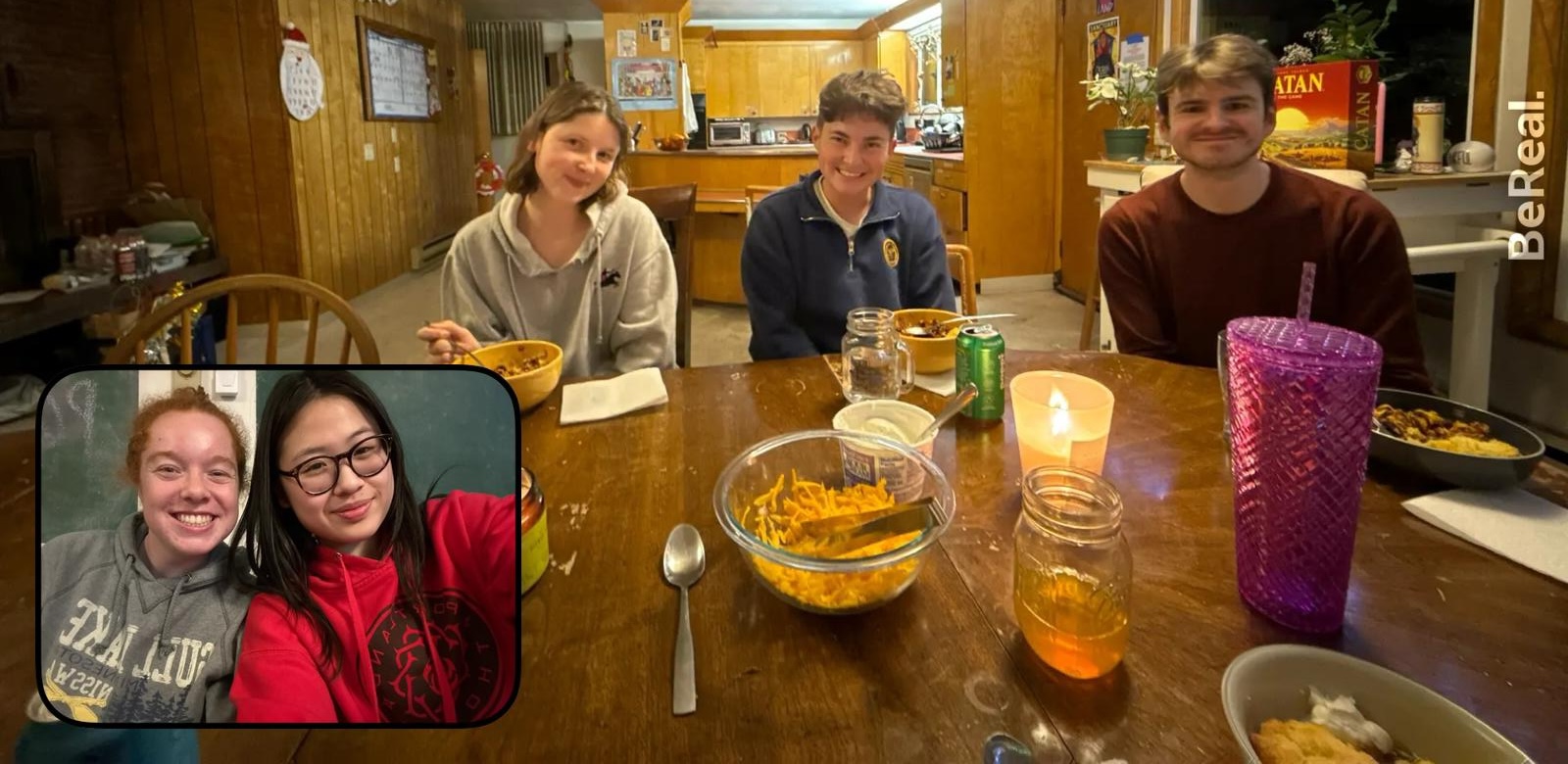
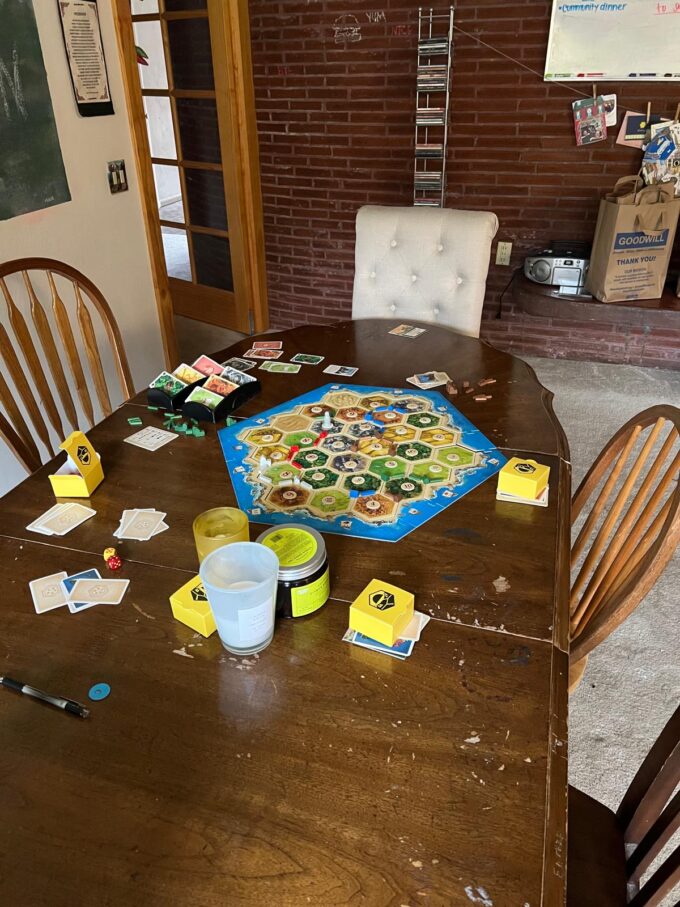
The big wooden table in the carpeted kitchen of Portland Morris started to wobble recently, and on a particularly quiet Thursday night, I set out to fix it. Ambitiously, I’d like to say I was driven to act by righteous indignation at the suffering of a wooden monument to the house’s history, or by the empathetic pain of seeing the sun around which our community orbits start to dim. While those motivators certainly existed, in truth, I was bored. Either the thin walls of our little bastion were more effective than usual in stopping wanton conversations from drifting about, or nobody was home, and in the quiet, the dark brown surface, stained and chipped and loved for a decade before we’d arrived, had started to look less like a table and more like a puzzle.
Step one was to pull the chairs away so I could get underneath. There are eight chairs, two sets of four, at our table. No pair matches another pair. I’m partial to the high-backed, white-upholstered set that stands at each head. They were our own additions to the house as of early September, when in our collective departure from the honeymoon stage we went on a neighborhood walk (One thought that crossed my mind: Did I really just commit to a year of this? Am I actually insane?). As if our street was answering my question, we encountered two slightly battered chairs on a curbside, and hauled them home. Next year, whoever sits where I sit now may wonder, Where did these chairs come from, and as he’s considering whether or not the white polyester is tacky, or whether or not the stains are cause for alarm, I hope he can sense me asking the same questions of each set of chairs that predates us.
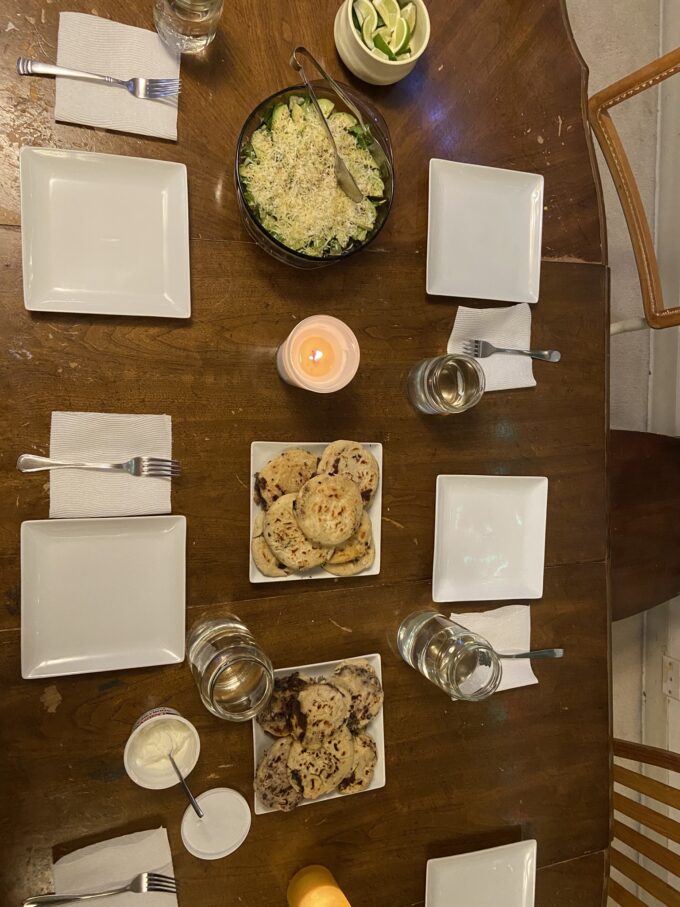
Step two was to clear the table. Not much was lingering— candles, mostly, and the electric lighter one of us had gotten in response to the frequency with which we use them. One of the candles, scented citrus green tea, was new, freshly won in a recent trial by combat with Trader Joe. Another, calming waves, was an office secret-Santa gift to a community mate, and the third, citrus, lived in a community mate’s bedroom before she brought it out during a game night. This table has a certain kind of gravity. It attracted the citrus candle then, and it attracted it now as I tried to pry it off with the other two. Sometimes objects stick to our table. A visiting FJV told us this idiosyncrasy wasn’t new. Other visiting FJVs, as they stopped by for their ten-year reunion, told us that the table itself wasn’t new, and that it had served them a decade before it served us.
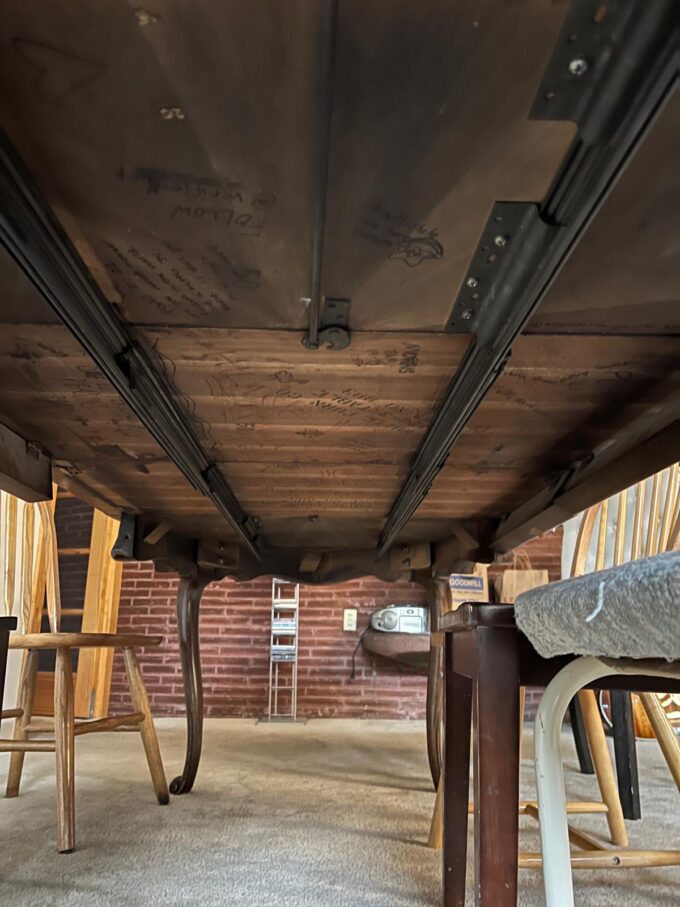
Step three was to tumble downwards underneath to investigate the problem. Before I noticed anything wrong, however, I noticed dozens of signatures, written in Sharpie, scattered across the underside of the table.
It’s January. I’ve lived in this house for six months. I can navigate its weird 70s architecture in the dark. We’ve found hidden messages not-quite-erased from our chalkboard, and hidden height markers behind the upstairs tapestry. And yet, as I lay beneath the table, looking up at a mixture of names and Twitter handles, and as the predominant takeaway seemed to be that everyone signing the table signed it “Morris,” I realized the house had managed to surprise me again.
An experimental wobble and a circuitous gaze identified eight nuts, two on each corner, as the beasts to slay, and so step four was to gather my arms in our garage’s small tool pile. I was no Odysseus, the floor was no Underworld, but by God, did I feel like a hero, resubmerging with wrench in hand. With my back to the floor, I raised my weapon to the first beast, envisioning fame and glory. But my quixotic dreams shattered as I connected the wrench to the nut and they didn’t fit together. Relieved I had attempted this while my housemates were elsewhere and therefore not needing to save any face, I returned to our garage for a different wrench. My target was buried under a milieu of half-sets of screwdriver bits and other hodgepodge hardware, all of which, I figured, spoke to the effort and the care that has gone into this house. And all of which laid on top of a kit of wrenches and nails in a Velcro case that suggested it was part of a furniture set. I sent a silent “thank you” to whatever desk or couch or coffee table had delivered us the tool and to the person, nameless and faceless but inextricably a part of Morris, who had acquired it.
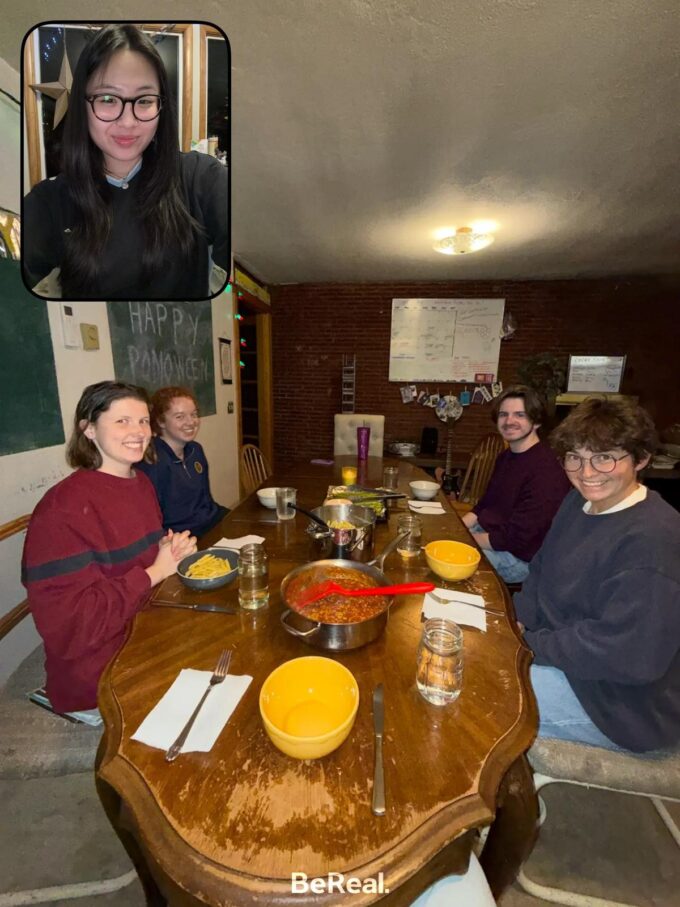
Step five, then, was the operative step. As I crawled back under the table, and I saw the wall of signatures, I thought about how just the other day I had cluelessly set up Catan two inches up from a portrait of the tradition into which we entered when we moved into this house. I thought about our community dinners and wondered which signature I’d set my plate above first. I thought about our community growing around that table, through meals and business meetings and card games. And I thought about how starting sometime in November, every weekday at service and right around 2:00pm, I’d notice a tug at the top of my gut and base of my heart pulling me back to that table. Even then I knew that the table was shibboleth and the true gravitative agent was my community. But a wrench can’t distinguish the symbolic from the literal, so I set myself out to make the eight necessary adjustments. It was, after all, a minor inconvenience with an easy fix, but I no longer cared about the challenge. Instead, I wanted to fix this table because it was important to people I care about. Every turn of the wrench felt more potent, driven by a gratefulness to be a piece of Morris, in the sense of the tradition but especially in the sense of its current form. When I stood up and shook the table and it wobbled less, more than anything else I felt joy in finding a tactile, gestural way to say those three words — the operative being “love”— I hadn’t managed to vocalize.
And so our table stands now. It remains slightly wobbly. There are chips and rings and if your coffee mug is warm it’ll get stuck and you’ll have to put some elbow grease into every sip. The three candles sit in the middle, unlit because I’ve misplaced the lighter. And I sit in one of the white high-back chairs, excitedly thinking forward to the next time we’ll be here as a community.

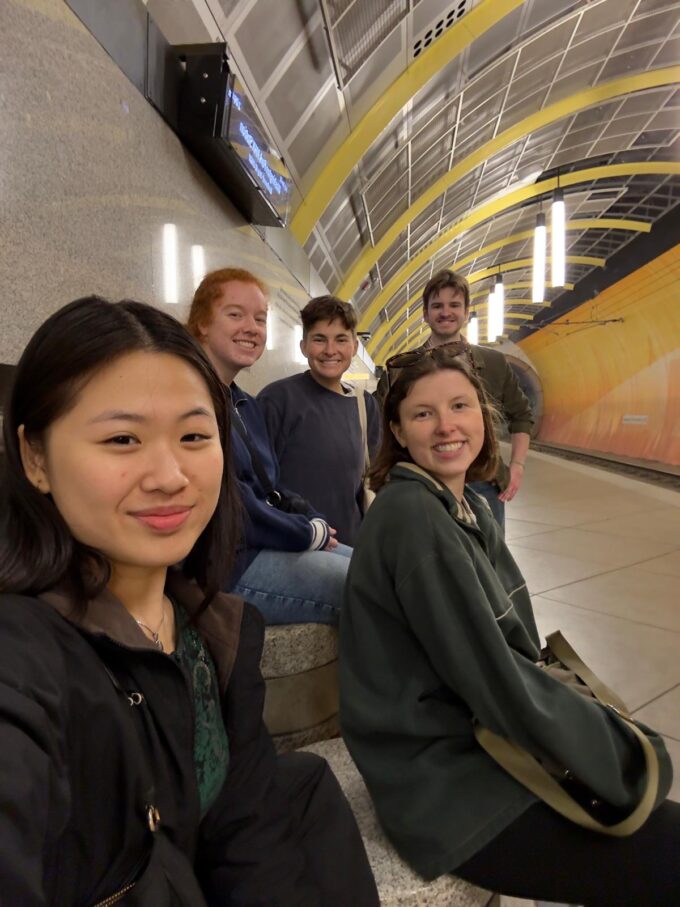
PoMo ’25-26 out and about in Portland. From left to right at the zoo: Charles Whelan (he/him), Julia Sholar (she/her), Patty Robben (she/her), Clara Hasemeier (she/her), and Amy Lin (she/her).
Wow, I’m feeling so nostalgic for our old, wobbly, and sometimes sticky table. The memories around the table in community are one of the best parts (if not THE best part) of the JV year. Thanks Charles for the beautiful reflection and for your handy work to preserve this.
– FJV ’23-24