A Coffee Chat with Maggie Lenhart (Juneau, AK ‘23-24)
“Relationship building is really the center of everything. And I think you need to go into it knowing that. It is going to be challenging. You need to be willing to put a pause on other things in your life and really give focus to it for a year. It calls on you at service, outside of service, in what you’re thinking about. You really have to be all in.”
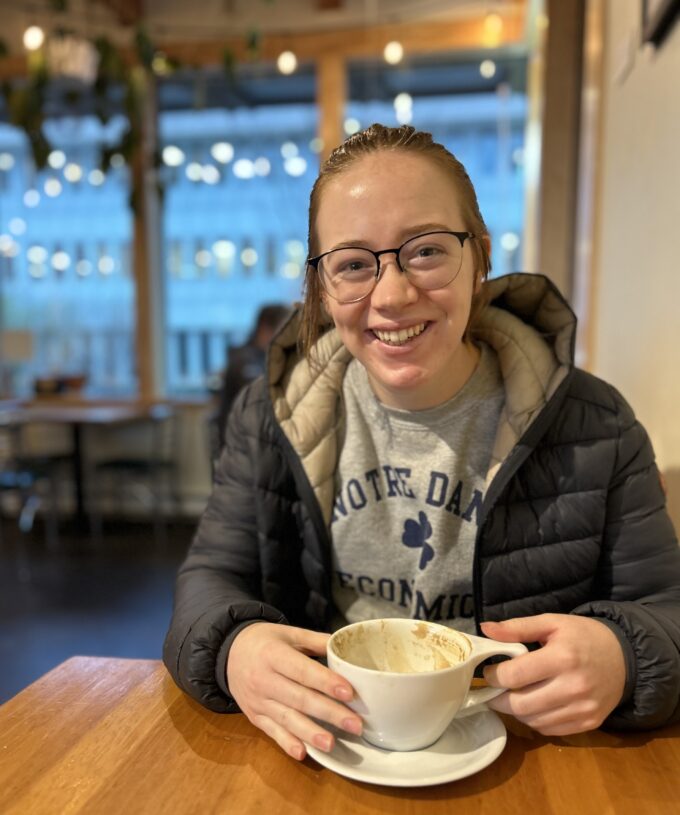
Maggie Lenhart (she/her) spent her life in the Midwest until she moved to Alaska last year. Hailing from a small town in northwestern Ohio, Maggie studied economics at Notre Dame. While she loves working with data sets, Maggie can see her discipline as in tension with the hope she has for the world. “The whole basis of economics is that there is always a scarcity constraint. That is a baseline assumption. How do you distribute resources, equitably, efficiently, under constraints?” Sometimes, she wishes economics looked more at equity than efficiency, but after a year of service, she is still pursuing ways that she can use data to ask questions about the world… and change it for the better.
This pattern happened again and again throughout her year and after – moments of continuation and moments of interruption that she tries to hold in tension.
Last year, Maggie served at the Zach Gordon Youth Center in Juneau, Alaska. She had received a job offer for work in Washington, DC that she deferred for her year of service. For her, becoming a Jesuit Volunteer felt like a continuation of her commitments from her life on campus – to build relationships, with intention, working towards the common good and social action in the communities she was a part of.
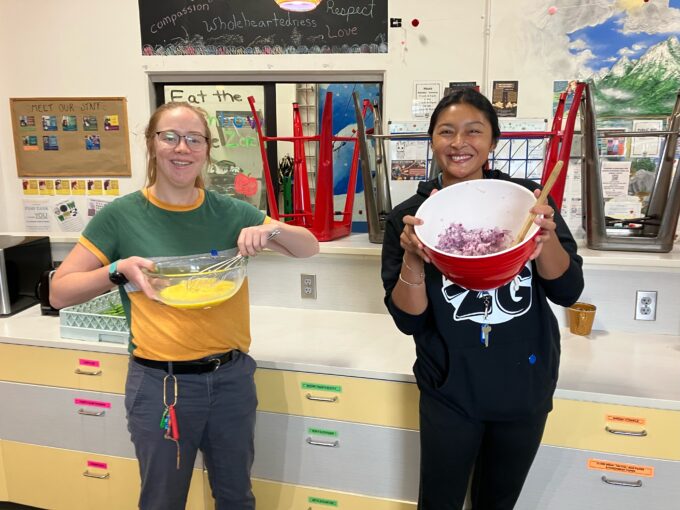
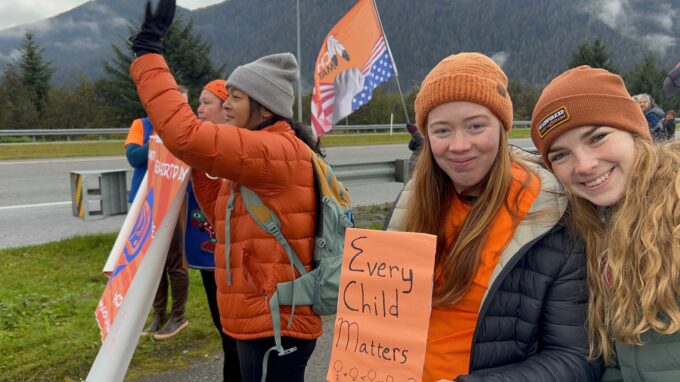
But, the cultures she encountered at the Zach were so different than what she had been exposed to before. “Indigenous culture is something that you touch everyday living here. Especially at the Zach, it is really embedded.” This exposure changed the questions she asked herself about the Midwest where she grew up.
But, as she learned about Alaska, she also learned about the many pressures on life in the state. On the one hand, it is resource rich, providing fish, oil, and gas for much of the rest of the country. On the other hand, social services and institutions do not reflect that level of investment.
“It can be a tense conversation to say I am only here for a year only…That can be something tricky for the JVs to navigate, but it is an important thing to think about when you are doing this kind of work.” Alaskans are used to people coming and going, as tourists, as temporary workers. Maggie found the long-term commitment from JVC Northwest to be helpful. “A lot of people know what the JVs are in town. That really helps – people are grateful… ‘Wow, that so awesome that you are here, thank you so much.’”
That sense of welcome and appreciation started with the first week of living in the Juneau, when Maggie and her new community were welcomed by former Jesuit Volunteers.
“It’s crazy how much support you have when you get there. People made us meals every day the first week we were here. It’s not like you are just dropping in to a place you have never been and you are just alone. You are going with people who are also new, and then there are all these former people who have done this that are here…
It is shocking really how you are instantly embedded when you get there. That really makes it a lot easier.”
While the gifts of community made it easier to settle in to a new place, the challenges of community taught Maggie so much. “I think I got better at being more direct, not as conflict avoidant.” She shared about going with the flow, with what other want, as a result of the culture of the Midwest where she was raised. But, at Orientation she learned tools for making decisions as a community. She found when they used those tools, she had to stop and consider her own desires. “Going around the room and everyone saying what they really want and then, you reach a compromise.” For Maggie, this was a new experience, one that helped her face conflict instead of avoid it.
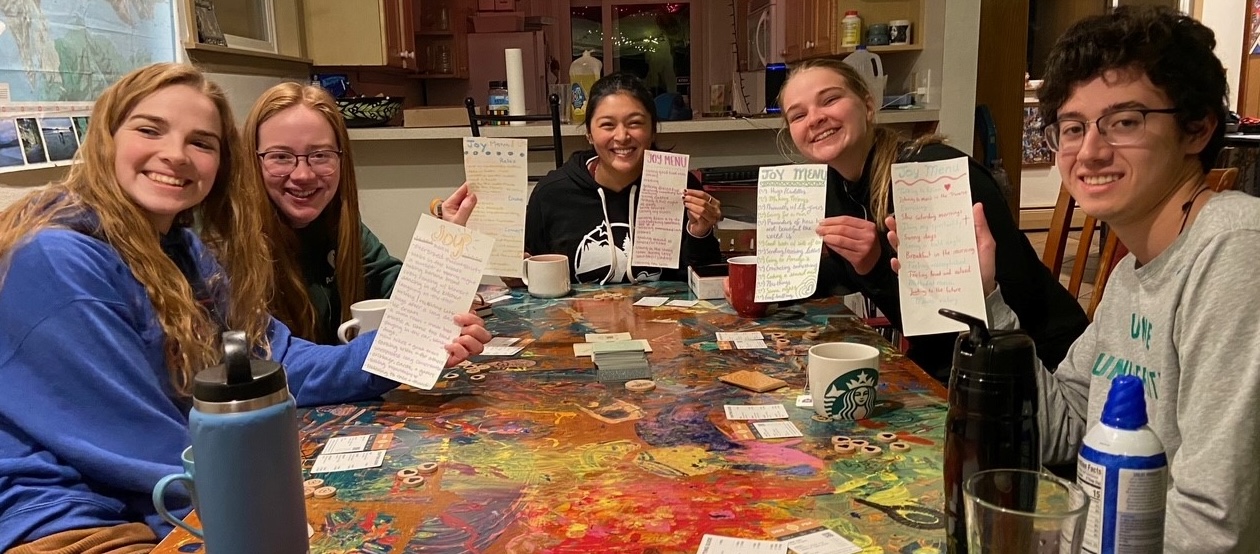
“Sometimes that means you have to have that tougher conversation with someone. That is something I have been bad at in the past. I really hate direct conflict. It really makes me anxious.” Living in community taught her the value of healthy conflict, that she can hold all these tensions and move forward. “Seeing my roommates be more confrontational really pushed me.” Maggie learned that she could adapt.
“One of the biggest impacts has been teaching me how to engage with a new community. I do so many things I wouldn’t have otherwise done. Having the confidence to go to that community event or reach out and just volunteer with an organization or get involved with that club. It has given me the confidence to move to a new place and really engage with things there. It was a big step for me for sure.”
In the end, Maggie turned down that job offer she deferred. She didn’t feel like she was done with Juneau yet, wanting to learn more than just one year could teach. Maggie stayed, working for the State of Alaska as an economist and serving as the In-locale Coordinator for the ‘24-25 JVs… helping provide that same welcome and support for JVs that made such a big difference for her. She continues to keep relationships at the center, even after her JV year, even when she is modeling the impact public policies could have on communities all over the state.
To those considering becoming JVs or preparing to be JVs next year, she says: “You have to be in it for the right reasons, for sure. I think it is a really amazing experience for the right person. It was a really amazing experience for me, but I think you need to have the right intentions going into it. I think you really need to be able to prioritize relationships.”